Sean O’Sullivan: Ranger, Father, Professional
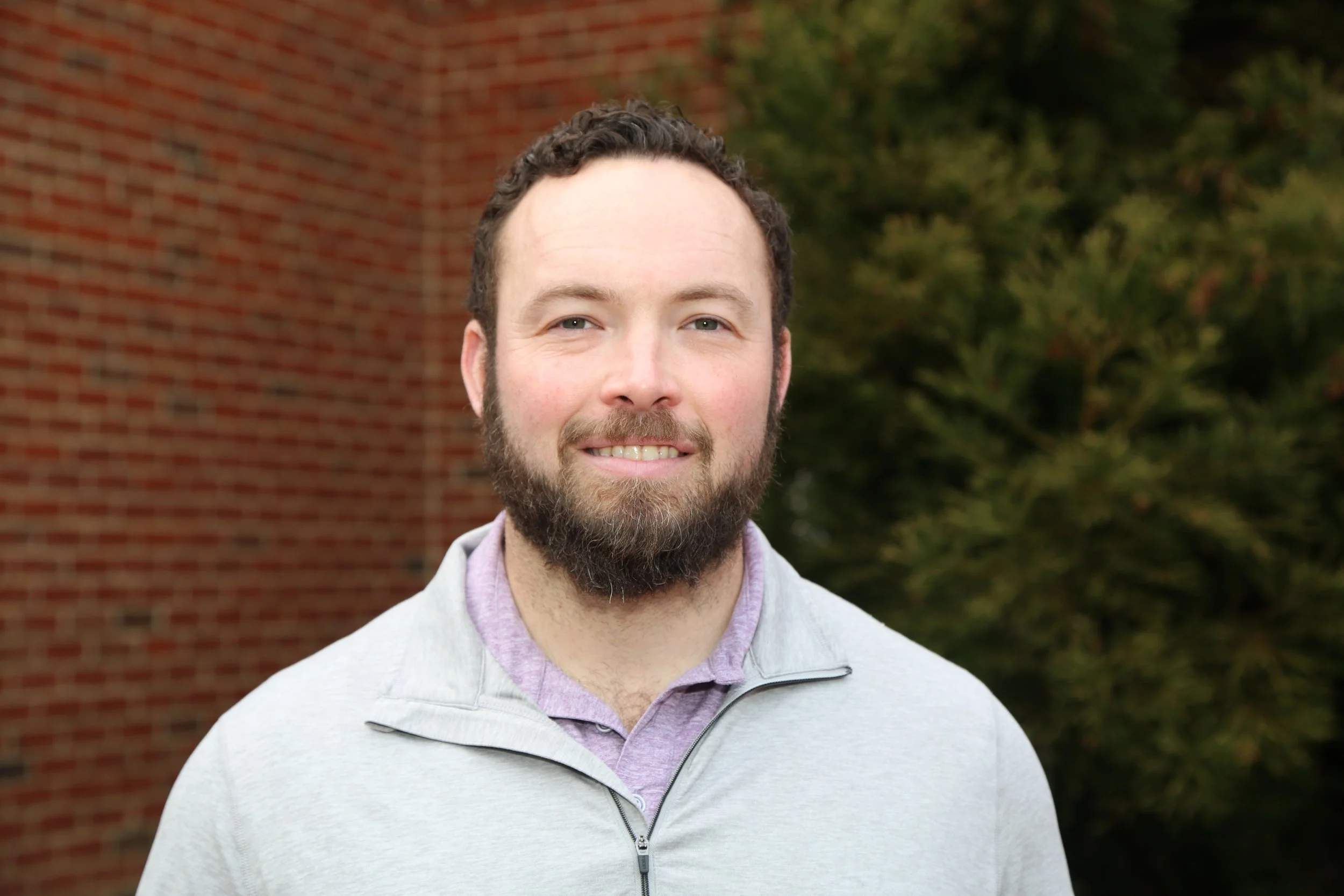
Sean O’Sullivan is a private security professional, and former Army Captain with multiple combat deployments in 75th Ranger Regiment. Following his departure from the Rangers, he found a job in the medical device sales sector for several years, before finding his way to the private security industry, where he still works. He has grappled with the military transition, as many of us have, and his insights surrounding identity, tribe, and purpose are a phenomenal exploration of what it means to build a life beyond service for many of us.
This was an incredibly fun interview to do, and editing it down to size was a consistent process of cutting away deep and insightful back-and-forths to preserve Sean’s most relevant commentary (the most deep and insightful) on his own transition. For combat veterans looking to learn about the emotional roller coaster, this is a great starting point.
-
So much of our identity in those years was wrapped up in the uniform. In my early 20s I was a platoon leader, later a company commander, and when you’ve got scrolls on your shoulder and a CIB, you don’t have to explain much. People already know who you are. That credibility is built in. When I left the Army in 2016, I was still Captain O’Sullivan in my head. Transitioning into corporate America, that changed.
Now I work in corporate security, mainly for high-net-worth individuals. When people ask what I do, I usually just say “corporate security” and leave it vague. My identity isn’t tied to the job anymore the way it was in the military. It pays well, it feeds my family, and I’m grateful that the skills and network I built in the Army helped me land here. But it’s not what I want to talk about in my free time. More often than not, the conversation circles back to the military anyway, and I can talk about that all day.
-
That’s the hard question, “who am I?” For me, it’s my kids. My identity now is defined by how they’ll see me when they’re grown. What example did I set? What lessons did I leave them with? If they turn out to be good men, then I know I did my job as a father and as a person. It’s less about what Sean O’Sullivan does for a living and more about who I am as a human being, as a mentor, as someone the next generation can look to. That’s what gives me purpose now.
-
That’s funny, because I don’t think I ever really asked myself what my purpose used to be. I was just a college knucklehead at a time when the country was at war. I didn’t grow up with some deep desire to serve. In fact, being a military kid gave me some resentment toward the whole thing. But I had the skills and ability, so I joined. Then it was one step after another: infantry officer, Ranger, 75th Ranger Regiment. My purpose became the mission and my men. Families take a backseat, and that’s the reality.
Even leaving the military, my focus was still off. My purpose turned into money, to make more of it, to find the next job, to climb. I took a sales role thinking I’d make my first million, but it was empty. My personal life unraveled, I was out partying, and I tried to fill that void with distractions. You go from being Captain O’Sullivan, where people do what you say, to standing in a room where no one even notices you. That eats at you. When the job started falling apart too, I had to take a hard look at myself.
That’s when some Ranger buddies connected me with an opportunity at a company called Surefox. Suddenly, I was back in a tribe of veterans, law enforcement, and people who spoke the same language. It felt like finding the locker room again. And that’s when I realized what had been there all along: my purpose is helping people who can’t help themselves. It’s why I stayed in longer than I planned, why I volunteered for deployments, and why I care about outcomes in every job since. Whether it’s patients, clients, or now my kids, if what I’m doing is making someone else’s life better, then I can live with that. That’s what drives me.
-
Yeah, I mean, I didn’t grow up dreaming about serving. I wasn’t that ROTC guy out tying rope bridges and knots. For me it was like, “Hey, the school for wayward boys is open at Fort Benning, why don’t you give it a shot?” And I thought, alright, I’m big, I’m strong, I’ve got some leadership skills, let’s see what happens. It just kind of worked out from there.
That’s how it goes in wartime. You’ve got a whole generation of young men without much direction, and the Army says, “Here’s your purpose. Here’s your mission.” And that can be a powerful thing, since it gave us structure, a tribe, something bigger than ourselves. But it can also go the other way. We saw that overseas in the Middle East, how that same drive can be twisted and used against people. Either way, it’s still the same thing: youth searching for purpose and someone saying, “Here’s yours.”
The real shock comes when you leave. That “loaned purpose” doesn’t follow you out the door. The whole framework you used to make sense of the world, the Army values, the orders, the mission; it turns out they don’t belong to you anymore. And suddenly you’re left standing there, thinking: who am I without this? That’s the part nobody really prepares you for.
And honestly, I don’t know if you ever fully transition. That life is ingrained in us. It’s in our moral fiber, in how we see the world. And that’s not all bad. Those little things the Army forced on us like accountability, persistence, and leading through adversity, they’re the reason a lot of us are successful now. People take whole college courses on that stuff. For us, it was OJT every single day, taught by guys who might not have finished high school but knew it cold. Salt of the earth. That’s what shaped us.
-
Yeah, man… I’ll give you two answers. On the small, everyday side, I miss the morning huddle. You’d roll in at oh-dark-thirty, maybe a little hungover from the night before, throw on your PTs, grab an energy drink, and the first thing you knew was you were gonna see your guys. Talking about what you had to do that day, what PT was gonna look like, just yucking it up. And then you’d close the day out with the same crew.
It sounds simple, but that was it for me, knowing the first place I’d be every day was with my boys. My platoon sergeants, squad leaders, team leaders. Especially in Ranger Regiment, we were tight. We had good relationships, and those mornings were always fun. Just shop talk, laughing, setting the tone no matter what kind of day it was gonna be, whether fun, shitty, whatever. That was something I didn’t appreciate until it was gone.
And then on the bigger side? Deployments. I miss deployments, man. You never felt more alive. Everything was simple, you do your job, lift, eat, sleep, go out, come back. Life back home kept moving, but over there it was just you and your men. And in that space, you got close in a way that doesn’t happen anywhere else. You saw the funniest shit, you went through tragedy together, you celebrated wins like guys having kids, and mourned losses like guys losing loved ones. All of it, together.
Coming back from a mission and everything went well? You’re high-fiving, grabbing a lift, buzzing off the adrenaline. Sitting in the operations center before you roll out, and it’s not death metal blasting like people think. Half the time it was Katy Perry or some random pop song blasting. Everybody joking, putting kit on, getting ready to load trucks for the airfield at night. I miss that shit, man. That was the shit. I get goosebumps just thinking about it.
And the thing is, deployments stripped all the politics out. In garrison, rank mattered. Out there, it didn’t. You had rank, sure, but at the end of the day you were there to do the job and to look out for each other. That’s what mattered. If we all didn’t come home, we failed. Period. That’s the brutal truth.
But there’s nothing more beautiful than seeing men fight for each other in a firefight, shoulder to shoulder. That never leaves you. That will always live with me, and I’ll never want that to go away.
-
Yeah… so I got picked up by Medtronic. They had this training pipeline for veterans, but also for folks like physical therapists, nurse practitioners, people with medical backgrounds. They’d run you through anatomy, products, pathology, how to carry yourself in an OR, that kind of stuff. Part of it was classroom training at headquarters, and part of it was field rotations, shadowing reps.
So maybe three months in, I go on my first rotation. The rep I was with was an Air Force vet who’d gone through the same program, so that was cool. But we’re in the OR one day and one of the surgeon’s instruments, a tool literally made for him, gets dropped on the floor, contaminated. Needs to be sterilized immediately. The sterilization operator is on break. I’m like, “Okay, well, just hit the button so we can get this thing going.” And he looks at me and goes, “Nope. I’m on break. I’ll get to it in fifteen minutes.”
So I’m standing there, vein in my head about to pop, like, Are you fucking kidding me? I offered, “Show me how to do it. I’ll do it.” Still no. Just flat out: “I’m on break.” And in my head I’m thinking, I should be thrashing you right now because you’re not doing your job. But that’s when I learned that this is corporate America. My buddy at the company, who is a great dude, sat me down afterward and said, “Man, that’s just how it is. They’re contracted. They don’t deviate from their schedule. They don’t do shit outside of their lane.”
And it blew my mind. Because where we come from, if you’re told to do something, you do it. Doesn’t matter if it’s your job or not , you find a way. In this world? Even the surgeon can’t pull that guy off break. If he tries, that guy can report the surgeon for making him do it. Wild.
The Army has plenty of bureaucracy, but stepping into hospitals, I realized there’s a whole other level of compliance, regulation, resources you have to actually account for. And it hit me: you’re not in the military anymore. You can’t just order people around. People can tell you to go fuck yourself, clock out at five, and go home. That was the moment where I was like, okay, this is different. I’ve got to find a new way to motivate and lead in this world.
-
My biggest fear was not knowing what I wanted to do. And because I didn’t know what I wanted to do, I didn’t know what I’d be good at. I’ve always had a fear of numbers and finances; I hated that stuff. In the Army it was like, “Just give me my ammo hand receipt, don’t make me do the accounting.” So I shied away from anything that was heavy on metrics like supply management, operations, analytics. That world scared me because I didn’t understand it.
So when I got out, I didn’t have a purpose, I didn’t know my “why.” I just took a job where I thought, okay, if I’m likable, work hard, I can make pretty good money. That’s how I ended up in medical device sales. But my fear was, what if I’m not good at it? What if I fail?
And honestly, it came true, but not because I wasn’t good at the job, but because of me. My own fears, my own insecurities, the unhealthy habits that crept in. Drinking during the week, staying out too late, rolling into the OR late the next morning. Little shit like that. Stuff that in the military was a total no-go, but I let it slide. And once you start letting that slide, you start losing who you are.
It wasn’t the job. It wasn’t anyone else. It was me. And looking back, I think part of it was the transition programs. The transition and placement company I went through did a lot of good things for me, don’t get me wrong. But the one thing they didn’t do was help me figure out my “why.” What’s your purpose? Because if you know that, then you can figure out where you’ll fit. Instead, it was personality tests, job matches, and here’s a stack of sales roles. Pick one. And I did. But without knowing my why, I was just trying to figure it out as I went, and I stumbled hard.
-
No, man. Honestly, I gotta back up. My last year in the military, I’d just graduated the career course, and I was going through marriage troubles. My wife at the time and I already had our first son, and she was pregnant with our second. Regiment wanted to send me straight to Italy to deploy again with a promise that “we’ll get you right back to Regiment, brother.” And if I’d been in a healthier headspace or a healthier relationship, maybe I’d have taken that path. But with everything going on, I just said, “I’m done.” I’d hit my goals, I didn’t want to be a regimental commander, and I thought maybe I could fix my family if I got out.
So I took a company command at Benning, started transitioning out while getting divorced, and my second son was born. My first year out was all training and rotations for the sales program. I wasn’t married anymore, I didn’t have the structure of the Army, and then I walked straight into a high-paced sales job. At first it was fun with all the traveling, learning, making some money. Second year, I was still rotating, interviewing, then I landed my territory in Raleigh. New area, new market, exciting.
Then the third year hit. And the excitement of being out was gone. Now I was divorced with two kids, trying to juggle time with them against a hectic travel schedule, expected to entertain clients, and on top of that, I was single with money in my pocket. So yeah, I acted like a bit of a degenerate. I’ll own that. And underneath it, I had demons from the military I never dealt with. Our second-to-last deployment, we lost one guy, Tommy MacPherson. Others came home injured. I never really addressed it. I’d go to the VA here and there, but it wasn’t routine, it wasn’t real treatment. I just told myself, “I’m good.”
All those variables piled up into the perfect storm. Thank God it didn’t get worse than it did, because I was getting to the point where I hated the job, wanted to quit, just felt like I was done. And right around then, the opportunity at Surefox came along. Honestly, it probably saved me.
-
100%, man. Wearing scrubs in the OR, trying to have high-level conversations with surgeons about techniques and procedures, I was like, what the hell am I doing here? I almost failed everything in high school, and now I’m supposed to be talking shop with surgeons? I went through a training program, sure, but I was faking the funk.
Everybody’s got sales techniques. Everybody’s a salesman to a certain extent. But for me, if I don’t feel genuine or confident in what I’m saying, it eats me alive. I felt like a fraud. Some people can compartmentalize that. I couldn’t. I felt inferior, especially intellectually, because it just wasn’t my world. You want to put me on a range? Plan close-quarters training? Solve a leadership problem? All day. That was my lane. But in those scrubs, in that environment, I never felt like I belonged.
And honestly, it was an identity thing. I was never truly driven to medical sales. If I’d cared about it, maybe I would have planned better, invested myself differently. But the truth is I wasn’t interested, and I used that as an excuse. I’m not comfortable with this, I’m not good at it, so I won’t really commit to it. And in the end, it took care of itself. I’m not in that line of work anymore. The problem sort of fixed itself.
-
Honestly, a little bit of both. The decision to get out, that wasn’t impulsive. I thought it through. It was, “I’m either going right or I’m going left.” I was very methodical about that piece: okay, how am I going to transition? Where do I need help? That’s why I used a placement firm.
But after that, it was kind of “Jesus, take the wheel.” I leaned on their process, followed the pathway, and figured, alright, this is the proven method, I’ll see what happens. And that’s where the plan stopped. It was like Iraq, we were great at taking the country, but stability ops? Not so much. I got the job offers, I picked sales, and boom, that was the end of the roadmap.
The whole focus back then was the professional side. How do your hard skills translate? How do you turn tactical expertise into technical expertise for a corporation? But nobody asked the deeper questions: Where do you actually fit? What are your values that aren’t stamped on an Army slide? What’s your why? If we had started there, then the long-term plan would’ve taken care of itself.
Instead, it was like, “Hey man, this is probably what you’ll be good at. Put on a suit and go have fun.” And that was it. No one taught us how to negotiate a salary, how to pick a location, how to evaluate benefits. That placement firm was great in some ways, don’t get me wrong, but their business model is about getting you out the door. Once you’re placed, that’s it. You can reach back, sure, but you’re no longer the priority.
-
Honestly, all of the above. The opportunity at Surefox came at a really unique time in my life. I was at a crossroads. I already knew I didn’t enjoy the sales role I was in, and if I stayed in that world, I’d want something less clinically involved, something more consultative, or maybe outside of medical altogether. My time was too valuable at that point, especially with my kids, to be on call all the time.
So when the Surefox role came up, it was explained to me in a way that sounded exactly like a battalion or company XO job: talent management, driving initiatives, change management, all the admin and people-oriented work that I was good at in the Army. And some of my former soldiers were going to be reporting to me. It felt like a natural fit. The company had just secured a big Bay Area contract, the trajectory looked good, so I jumped. Then the world shut down in January 2020, but ironically that only made us grow faster. I benefited from that timing.
From there, my growth at Surefox was intentional. I was focused on producing, growing the company, bringing on talent, helping build out infrastructure with guys like you. I spotted opportunities, like turning the travel team into a profitable unit for event security and ad hoc EP support, and that’s still going strong today. Some of it was luck and timing, but I used that luck wisely. And as my job went remote, I could spend more time with my kids, which fed back into my purpose. So yeah, it’s been a fortunate glide path, but it was also deliberate.
-
You know what, man? For me, the biggest one was terminal leave. People told me, “Don’t waste it, just jump right in.” Worst advice. If you’ve got terminal leave, take it. Use it. Take a pause. Life after the military is a moving train. Once you step on, it’s not going to stop unless you stop it. The last thing you want to do is rush straight into something without taking time to reset.
That pause is critical. Figure out your gym routine, pick up hobbies, get your personal life squared away, all the stuff you can actually control. Because once you join a new organization, you’re trying to learn a job, build an identity, fit into a culture, and figure out who the hell you are outside the uniform. That’s a lot all at once. I mean, one month I was running live-fire platoon exercises, the next I’m sitting in a classroom in a suit learning anatomy so I could sell medical devices. That’s whiplash. Take the pause. Whether it’s two months of terminal or just living off savings, take the time. Sleep in, breathe, spend time with your kids, get your head right.
And the other piece was the VA. People said, “Just get your VA stuff done.” But nobody explained how to do it. That’s not enough. You’ve got to approach it seriously, because this is your health and your benefits for the rest of your life. Document everything, get the bumps and bruises taken care of as quickly as possible. And if you feel like you’re getting screwed, get help outside the VA, call a VSO, legal help, someone who knows the system. Because if you answer a question wrong, if you phrase something wrong, you can lose out on care or compensation you’ve earned.
So, yeah, take your time with terminal leave, and square away your VA. That’s advice I give now, because I learned the hard way.
-
That we’re not just a bunch of trigger-pulling knuckle-draggers. What blew me away when I got to the 75th Ranger Regiment was the level of intellect. These guys aren’t just tactically sharp, they’re technically proficient in ways that are awe-inspiring. Maybe they’re not “book smart” in the traditional sense, but they know how to get the job done. That’s why they’re Pathfinder qualified, Jumpmaster qualified, knocking out some of the hardest schools in the military. It’s a ton of information to retain under stress, and they figure it out. That’s also why you see so many of them succeed after. They go to grad school, building businesses, working in the intel community, the Agency, whatever.
The misconception is that Rangers or SOF guys just run fast and shoot straight. But what’s in between their ears is the most impressive part. You put a problem in front of them, they’ll solve it, up to whatever level their experience allows. And they’ll keep pushing until they figure it out. That’s the real strength.
And I’ll tell younger Rangers the same thing now: your experience is invaluable. You are a proven performer. Whatever job you did, you proved you could execute under pressure. That translates. Apples to apples, when someone comes out of those units, you’re going to get better output. Different expectations, different lifestyle, and it shows.
Jonathan Ruffier: Yeah, for me it was the team dynamic. That willingness to solve a problem together at the speed of relevance. Nobody hides information just to be the hero, it’s about moving fast and getting it right as a team.Sean O’Sullivan: Exactly. That’s what I see too. A lot of problem-solvers, not just problem-identifiers. Guys don’t just say, “This is jacked up.” They say, “Here’s what’s jacked up, and here’s a way we could fix it.” That dialogue comes straight out of the small team environment. You bring perspectives together, build the best solution, and the sum ends up better than the parts. That’s how we operated, and that’s why those units produce the people they do.
-
Medical devices were high pace, no doubt. Competing priorities, constant urgency that, in some ways, is just like the military where everything is the priority. Private security has its own version of that too, but the value there is in planning. Mitigation, redundancies, thinking through first, second, third-order effects. That’s where we make our money, it’s not just executing, but anticipating. And all of that felt familiar, because it’s the same mindset I learned in regiment. Be proactive, stay adaptive, solve problems before they blow up.
Where it’s different is in the stakes. I can be in an operating room with a surgeon screaming because a tool is delayed. For me, that doesn’t even register as pressure. I’ve been yelled at by people with a lot more power, whether on the objective, at a range, or over a radio. So I just filter it out. I’m like, “We’re not getting shot at. We’re okay. What do you need?”
In corporate America, pressure is real; there are deadlines, clients, and last-minute requests. But pressure is also a privilege. And it doesn’t compare to what we felt in uniform. In the Army, whether it was combat or just training, lives were on the line every time. That’s a different weight entirely. Your failures as a leader get felt at the lowest level, and the worst possible outcome is somebody doesn’t come home. Nothing in this world compares to that.
So yeah, I get frustrated when a report goes out late, but I remind myself that this isn’t life or death. That perspective keeps me sane.
-
I thought I’d never find purpose again. After deployments and losing friends, I felt empty. I’d look at my son and feel survivor’s guilt, thinking of buddies who’d never get that chance. I was convinced that sense of meaning was gone for good.
But I rebuilt. I became a better father. I found my girlfriend and became a better partner. And through them I realized my purpose didn’t have to come from the military. Purpose can come from where you are, if you choose to live with intention. And if you don’t have it? Change it. You can control your response. You can control your happiness.
What made me happy back then wasn’t just the mission, it was the morning huddles, the connection, the bond with my guys. That was purpose. Now, I try to live my life the same way: doing more, being better, not just being some guy cutting his grass and paying bills.
These days, that purpose is my kids, my partner, and pushing myself; I’m going back to school and striving to put myself in whatever “elite” looks like now. It’s not Rangers anymore, but it’s still about setting goals, striving, and keeping sharp. That’s what keeps me moving forward.